Most people who live with anxiety know the moment it starts.
Your heart rate jumps. Your chest tightens. And suddenly your breathing feels like it has a mind of its own. Too fast. Too shallow. Too loud in your ears.
That loss of control can be the scariest part. It feels like your body has taken over and you’re just along for the ride.
But here’s the part we don’t talk about enough: your breath is also one of the fastest ways back.
When anxiety accelerates your breathing, it fuels the panic cycle. When you gently slow it down, you send a powerful signal to your nervous system that you are safe.
Breath control exercises aren’t about “just calm down.” They’re about giving your body clear instructions — steady, simple cues that help reset the alarm system.
And that’s what we’re going to walk through here.
Gaining control of your breath is the first step to regaining your own control during a panic attack or when you are feeling very anxious.
Research shows that controlled breathing techniques can actively calm the nervous system by increasing parasympathetic activity and reducing stress-related arousal. Slow, deliberate breaths have been associated with lower anxiety levels and improved emotional regulation compared with faster, shallow breathing patterns, and they support a shift from the body’s “fight-or-flight” response toward a calmer state. For example, peer-reviewed research has found that slow breathing exercises reduce anxiety and arousal in controlled settings, likely through nervous system modulation that favours parasympathetic dominance.
In my own practice, I find that intentionally focusing on the warmth of the breath as it passes through the nose enhances this effect, providing a sensory anchor that helps deepen relaxation and make the breathing technique more effective for me.
The 4 - 7 - 8 Technique
The 4–7–8 breathing technique is a simple, structured way to interrupt the stress response and steady your nervous system. By following the directions below, you deliberately slow your breathing rate and lengthen the exhale. That extended exhale is key – it helps stimulate the parasympathetic nervous system, the part responsible for rest and recovery, and signals to your body that it is safe to stand down. The breath hold in the middle also increases awareness and control, preventing the shallow, rapid breathing that can fuel anxiety. Practised for just a few cycles, 4-7-8 breathing can reduce physiological arousal, ease tension, and support the transition into sleep by shifting the body out of fight-or-flight mode and into a calmer state.
- Inhale through your nose for the count of 4 seconds
- Hold your breath for the count of 7 seconds
- Exhale through your mouth (like you’re blowing out a candle) for 8 seconds.
Box Breathing
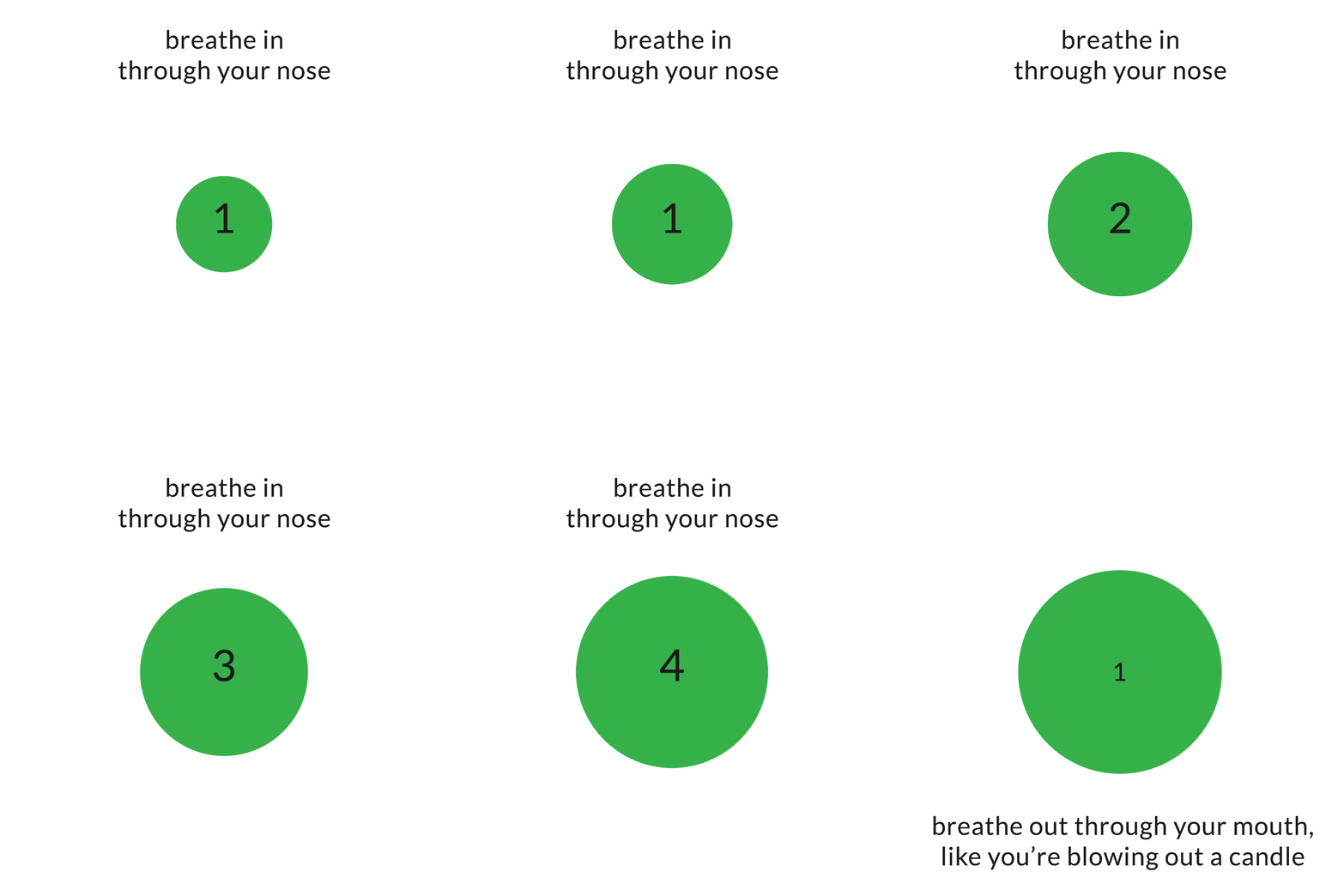
Box breathing is a steady, rhythmic technique designed to stabilise both your breathing and your thoughts. By creating a balanced “square” pattern you regulate your breath and anchor your attention. This even timing helps reduce rapid, shallow breathing and lowers physiological arousal, giving your nervous system a predictable rhythm to follow. Because it is structured and symmetrical, box breathing is particularly helpful during moments of heightened stress or racing thoughts, offering a sense of control and mental focus while gently guiding the body back toward calm.
- Inhale through your nose for the count of 4 seconds
- Hold your breath for the count of 4 seconds
- Exhale through your mouth (like you’re blowing out a candle) for 4 seconds.
- Hold your breath for the count of 4 seconds